
Anil JosephWriting. Reflections. Conversations.
An original work of satire by Anil Joseph

May I Bring
the Stool
Inside?

A Malayali Christian’s satirical reflection on belonging in India.

Two old friends. Two faiths. One country. A rather complicated conversation.

Armed with a wooden stool, an absurd imagination and an old Hindu friend willing to hear him out, a Malayali Christian sets about seeking a little clarity on his place in the India of tomorrow.

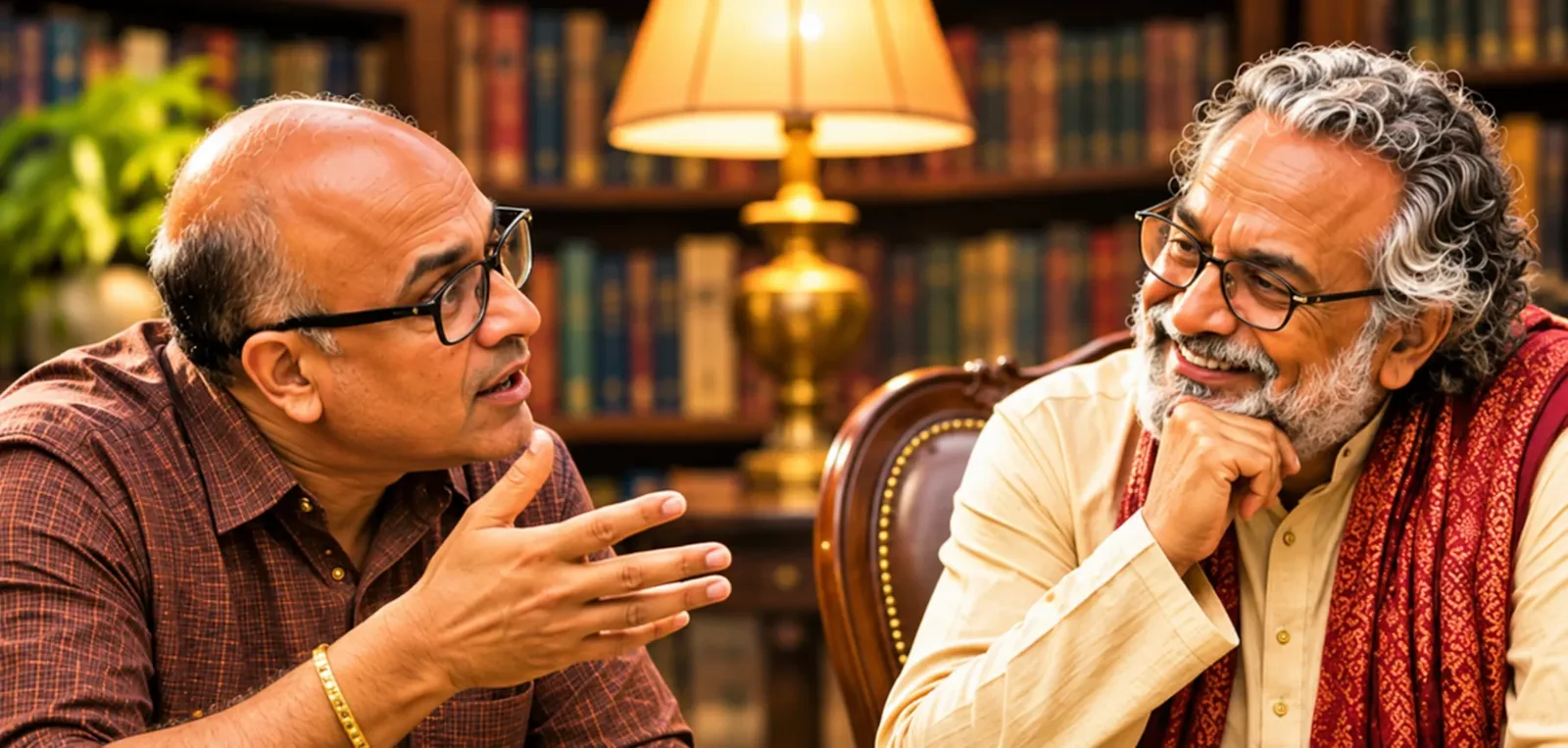
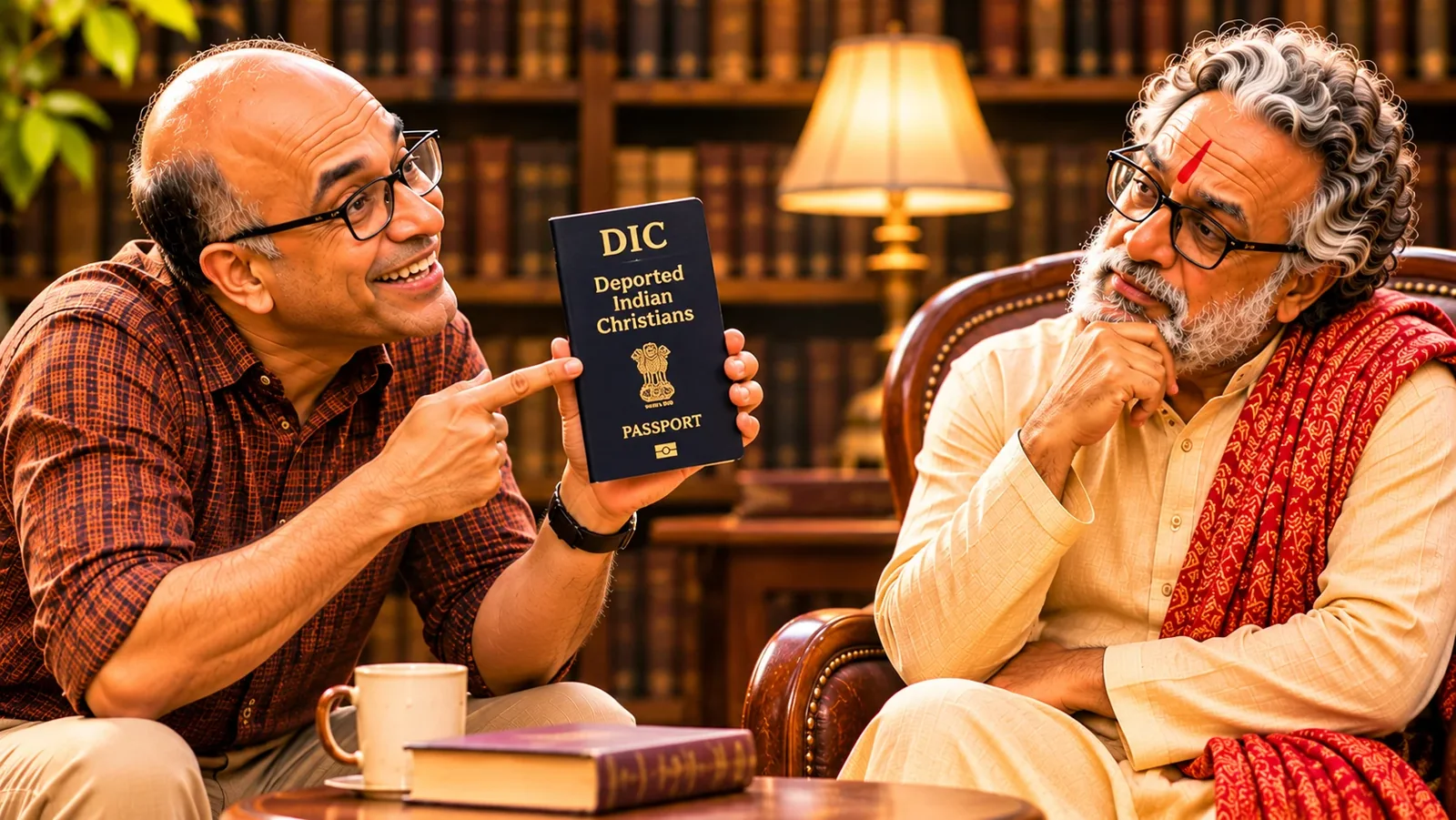
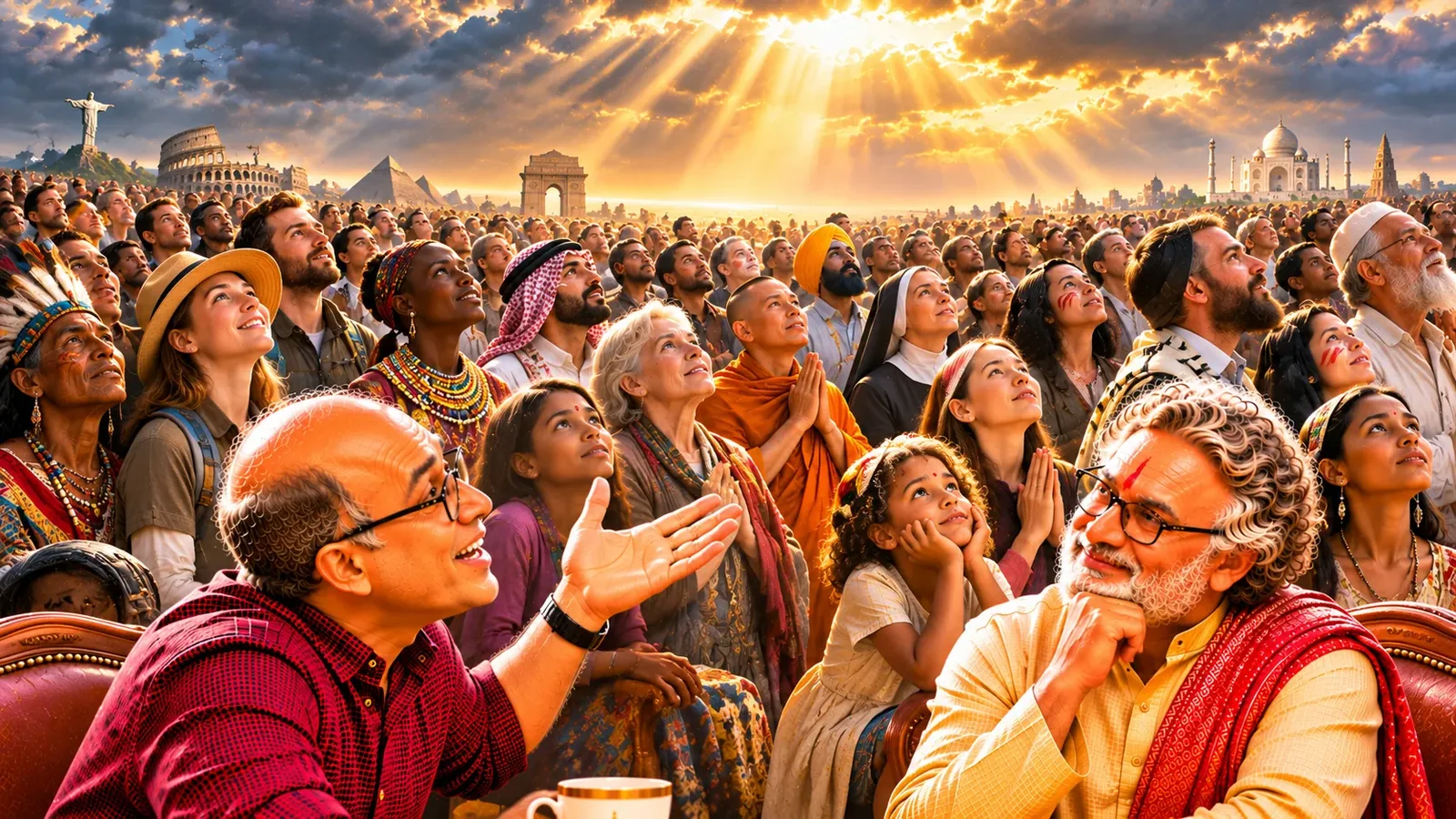
Illustration of two old friends in conversation in a library
Your next free hour

Give me an hour.
I’ll give you a conversation.

You could spend the next hour scrolling through social media, watching the news or arguing about the state of India.

Or you could pull up a stool.

And enjoy a rather unusual conversation about it. Something to laugh about, something to think about and perhaps something to talk about long after the hour is over.

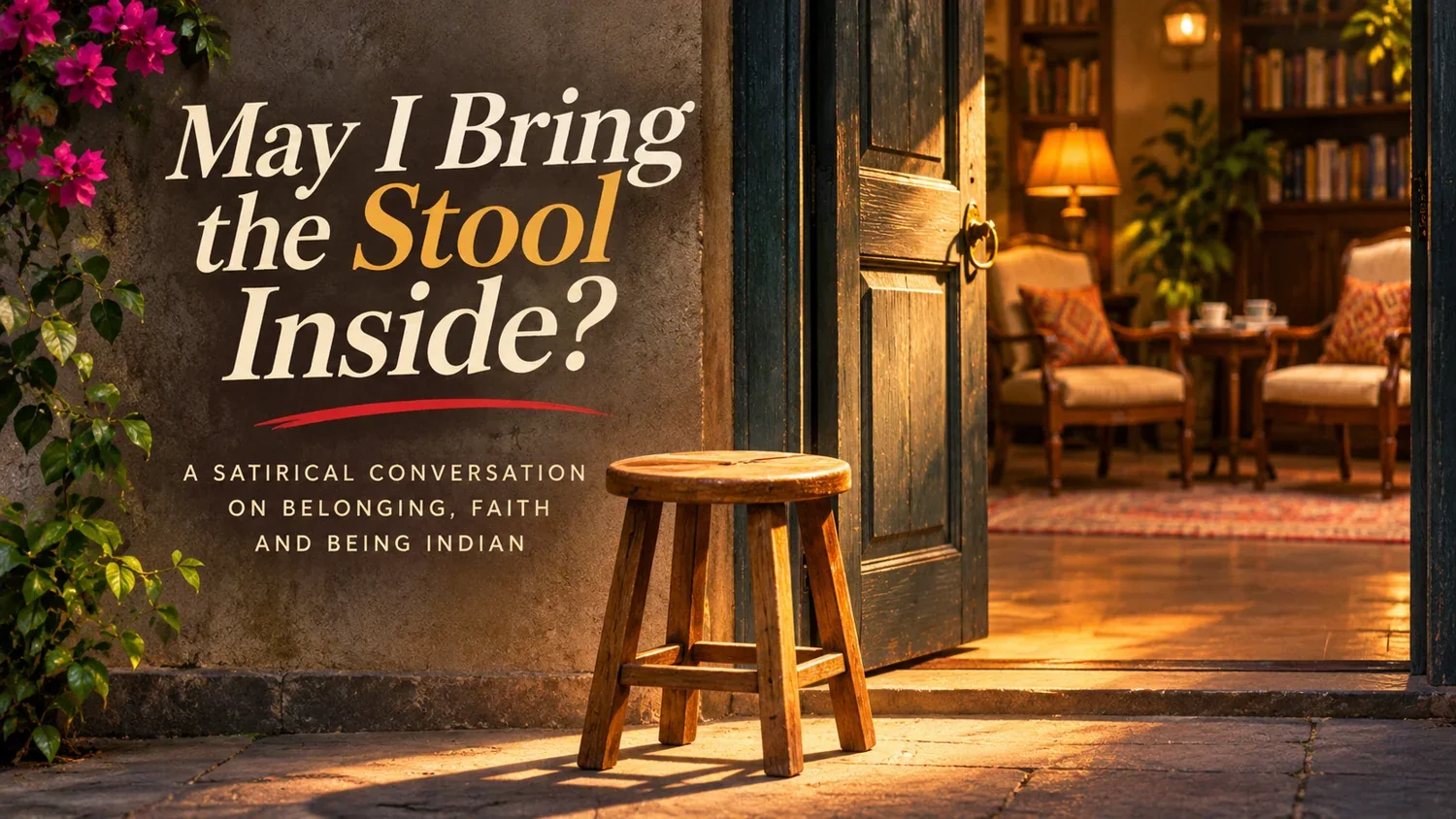
May I Bring the Stool Inside title artwork▶

70-minute illustrated audio play · English subtitles · Watch on YouTube ↗

01 / READ

A leisurely read

Make yourself a cup of coffee, find a comfortable corner and lose yourself in a rather unusual story.

Download the play · Free PDF edition (available at launch)

02 / LISTEN

A different commute

An hour in traffic doesn’t have to be an hour wasted. Take the conversation along with you.

Listen to the play · 70-minute audio edition

03 / WATCH

An evening of satire

Settle in and watch the characters and their rather improbable world come to life.

Watch on YouTube ↗

No subscriptions. No registration. Just a conversation.

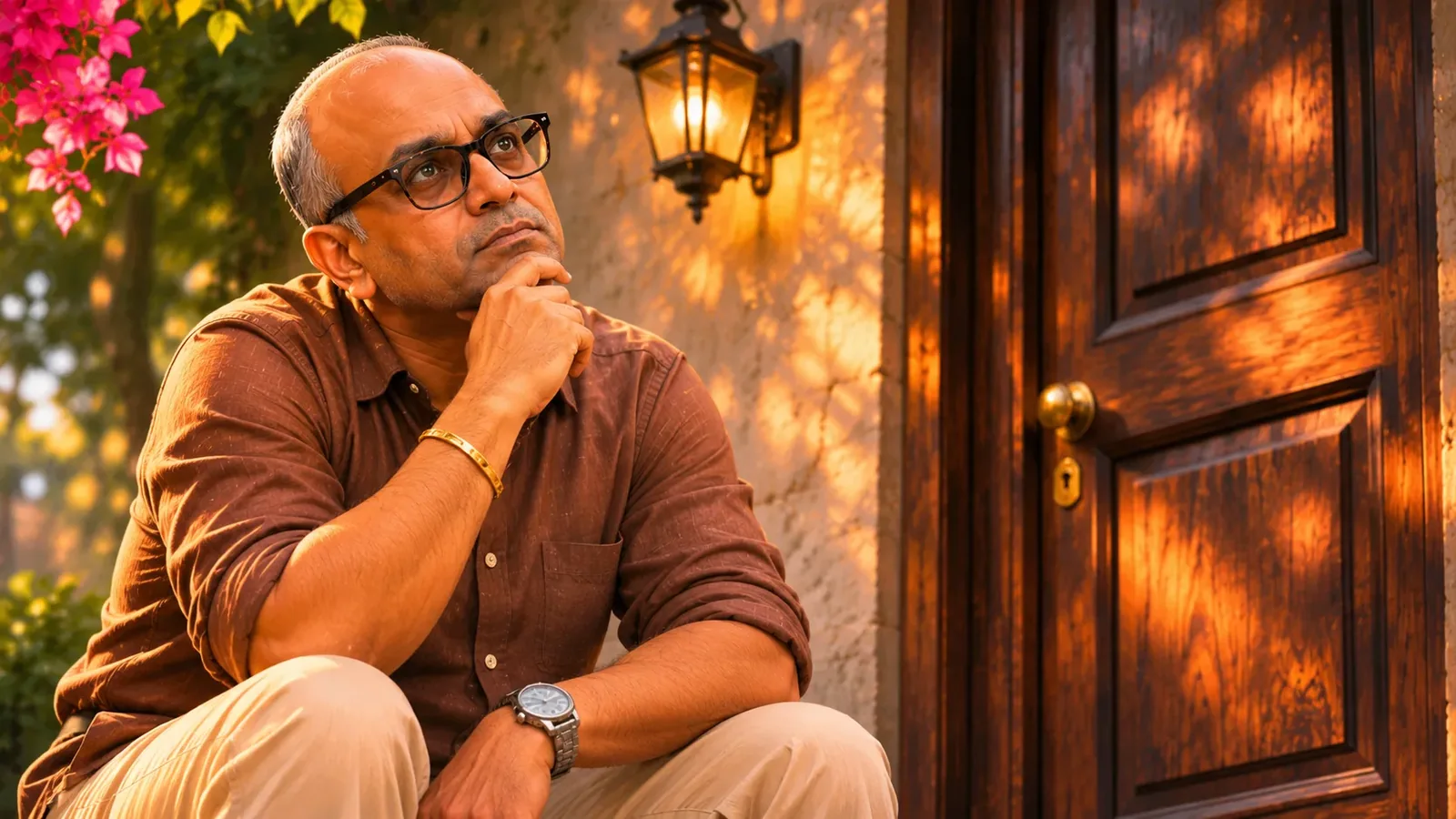
Illustrated character waiting outside a wooden door
About the play

An internal matter with external seating.

When a national conversation about Hinduism extends into a discussion about the future of India, what exactly is expected of those who belong to its religious minorities? Should they participate, politely excuse themselves or simply wait outside until the discussion is over?

A Malayali Christian, not entirely sure of the etiquette, turns to an old friend, a Hindu scholar whose wisdom and understanding of Hinduism he has always admired.

His questions are largely practical, his logic occasionally questionable and his enthusiasm for finding mutually beneficial solutions perhaps a little excessive.

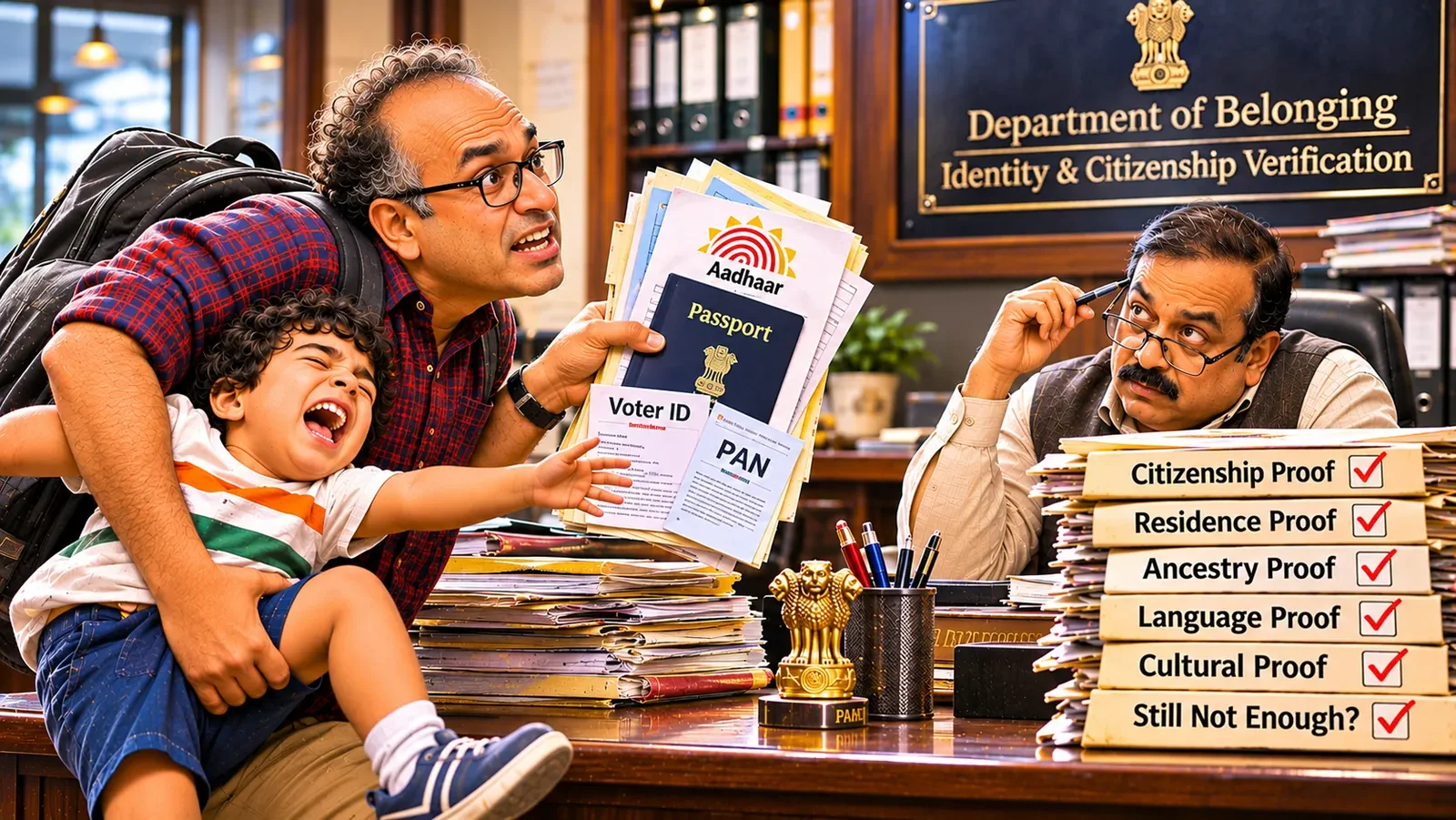
What begins as a seemingly innocent exchange takes increasingly improbable turns, wandering through religion, citizenship, history and politics, all within the comfort of a friendship that allows two people to speak freely.

An absurd conversation about something that should never need explaining: belonging.

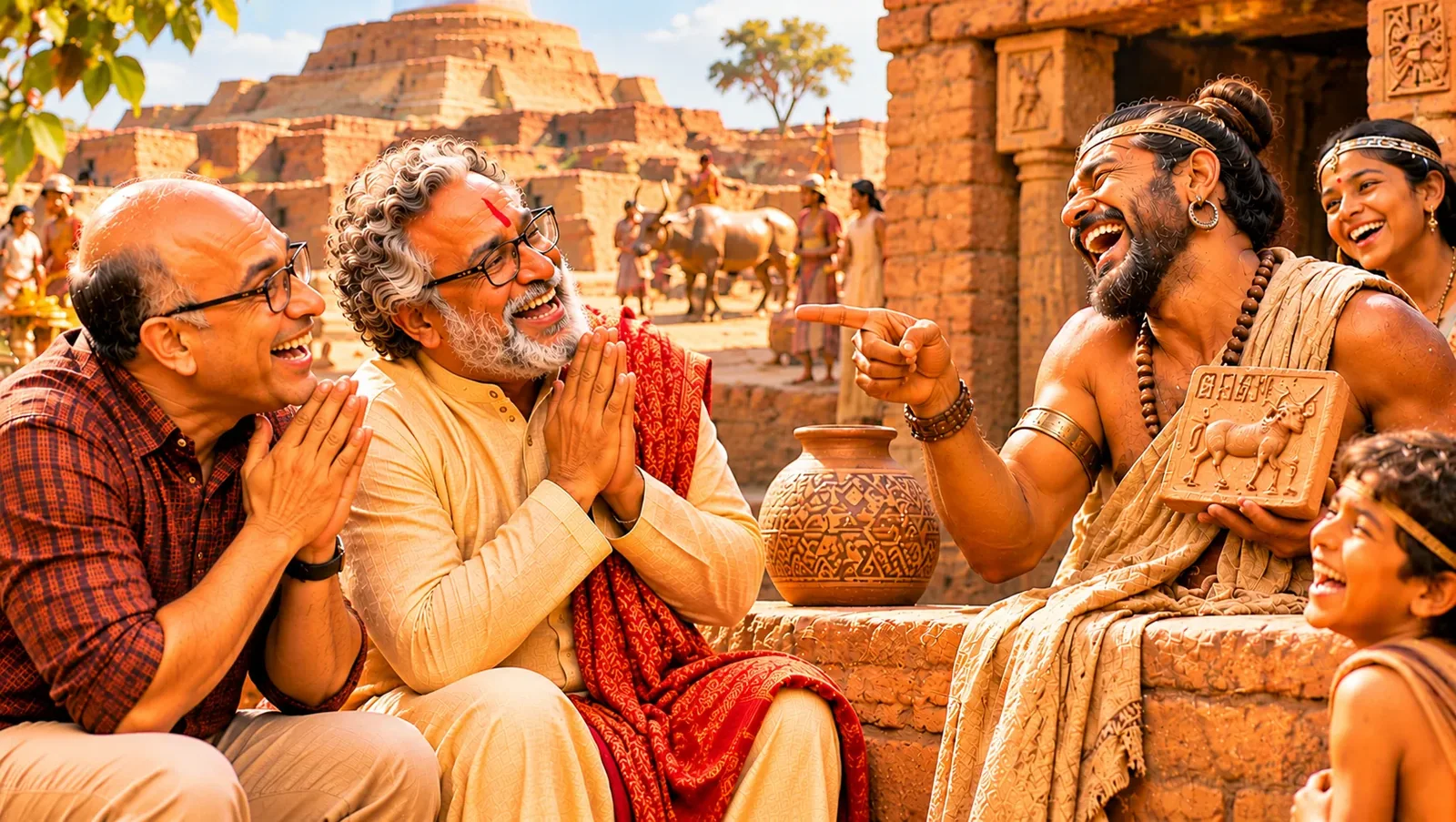
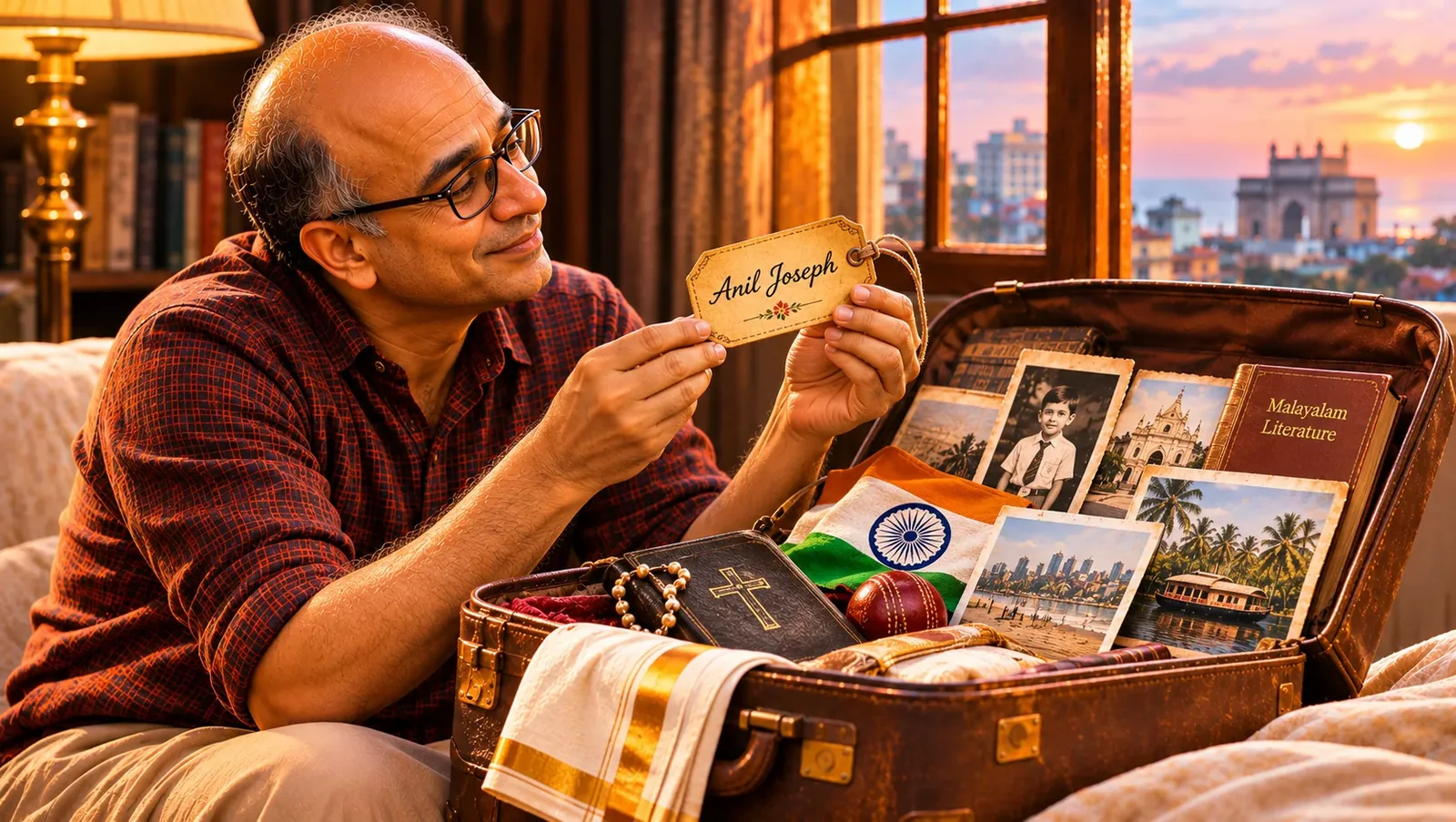
AI-assisted illustrations from the fictional satirical play.

Mumbai Literature Festival · 2026

I went to a literature festival. I came home with a stool.

During a visit to Mumbai in November 2026, I attended my first literature festival. Listening to the likes of Javed Akhtar and Gulzar was a privilege, but it was a discussion between Dr Shashi Tharoor and Pavan Varma on the history and philosophy of Hinduism that set my imagination wandering.

Much of what they spoke about reminded me of the inclusive Hinduism I had grown up with in Mumbai. Yet, as I listened, I found myself wondering where someone like me fitted into this larger national discussion.

During the question-and-answer session, I put a question to Dr Tharoor.

“Sir, as a Malayali Christian, what is my role in the current national debate on Hinduism, and what is my role as an Indian once that debate is over?”

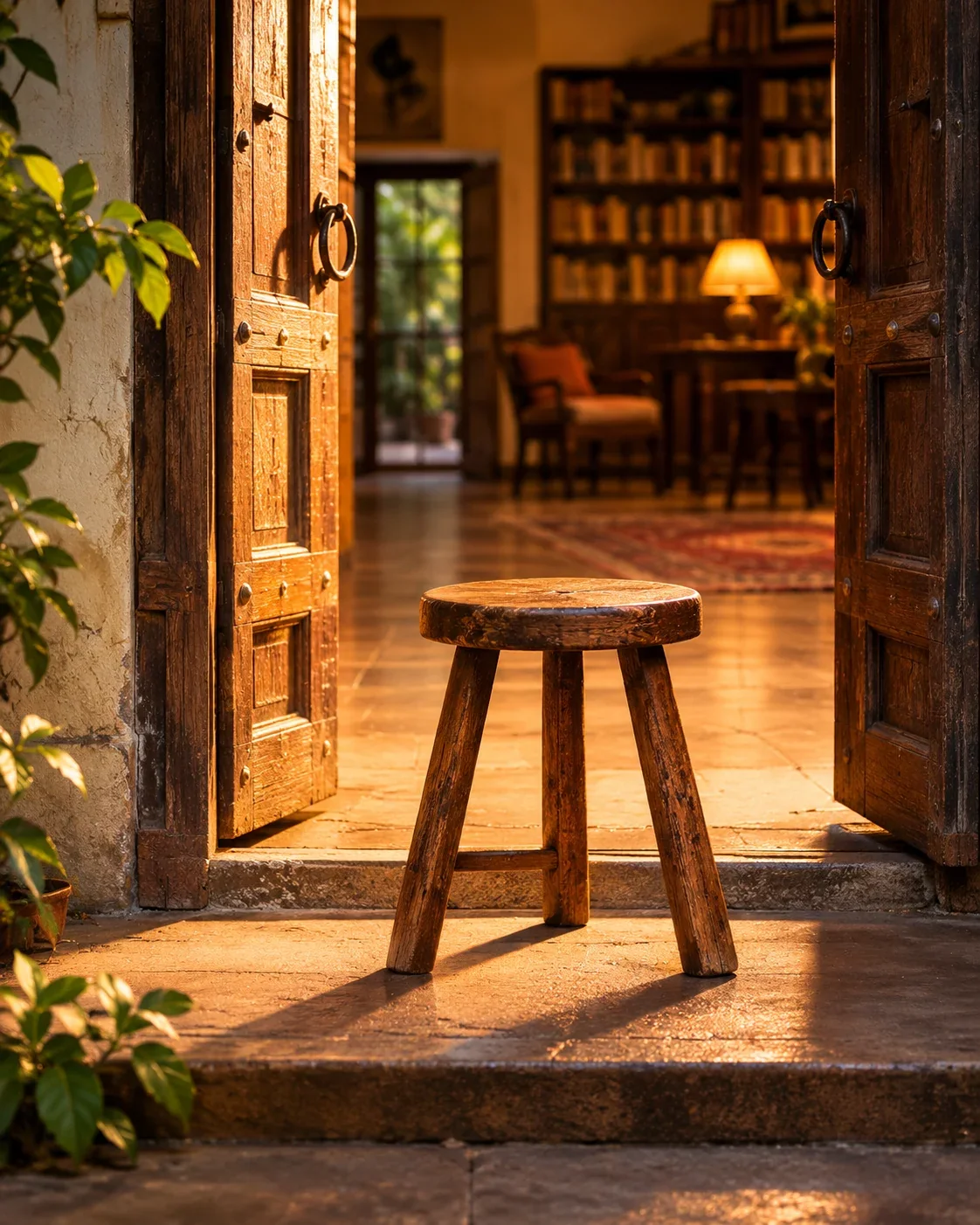
Somewhere during that session, I had begun imagining myself sitting on a little wooden stool outside a room where the future of Hinduism was being discussed.

That image stayed with me. Eventually, I decided to open the door, introduce an old friend and let my imagination do the rest.
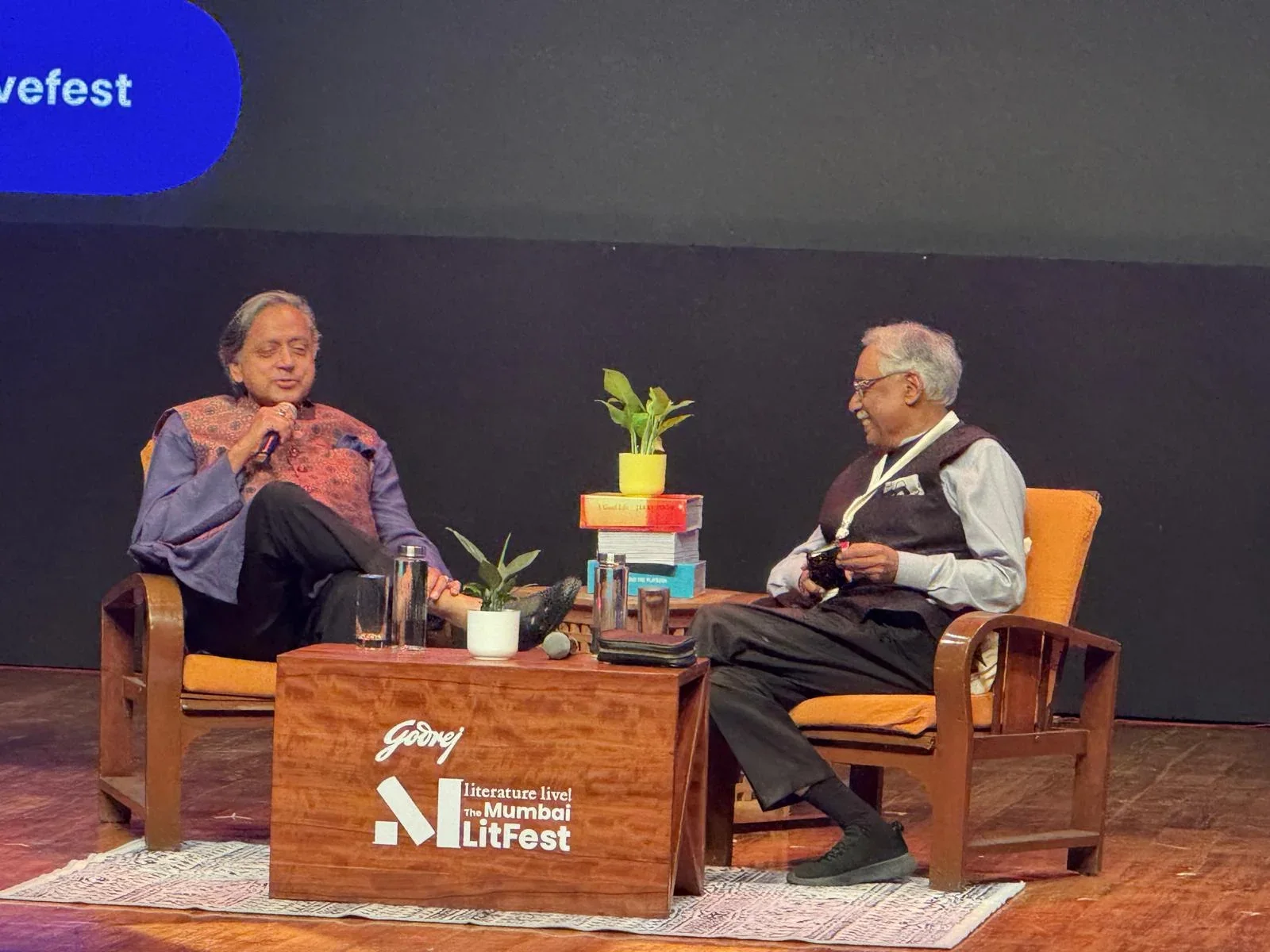
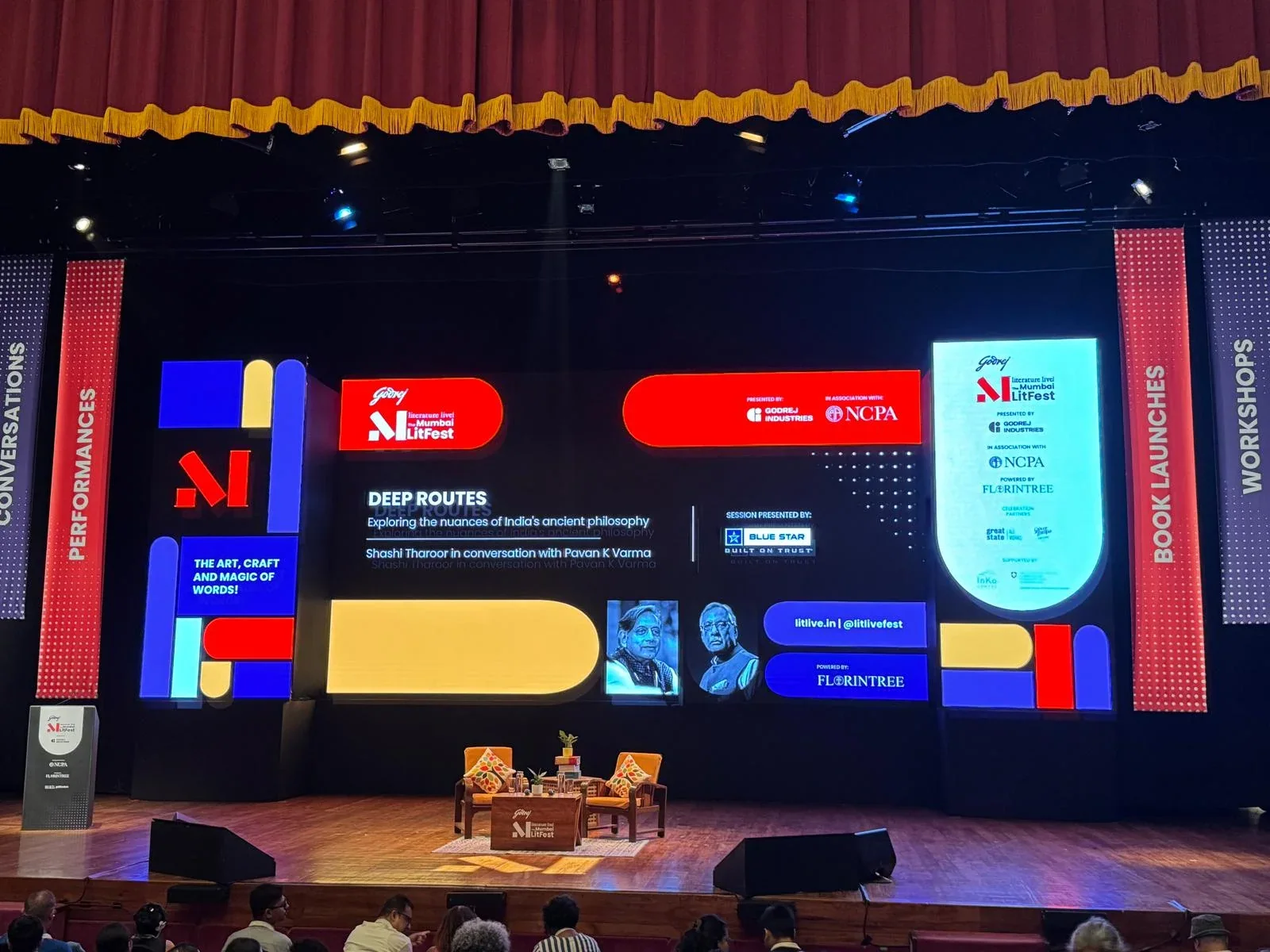
Discussion at the Mumbai Literature FestivalLiterature festival stageIllustrated stool and doorway
The Indian Sun article clipping showing the masthead, headline, byline and publication date
Featured in The Indian Sun · 20 November 2026

Indian by Birth. Christian by Faith. Australian by Choice. Where Does Belonging Begin?

In conversation with journalist Indira Laisram of The Indian Sun, Anil Joseph reflects on the inspiration behind the play, his enduring relationship with India, the perspective that comes from living away from one's birthplace and the choice of satire as a means of exploring identity and belonging.

Read the full interview ↗
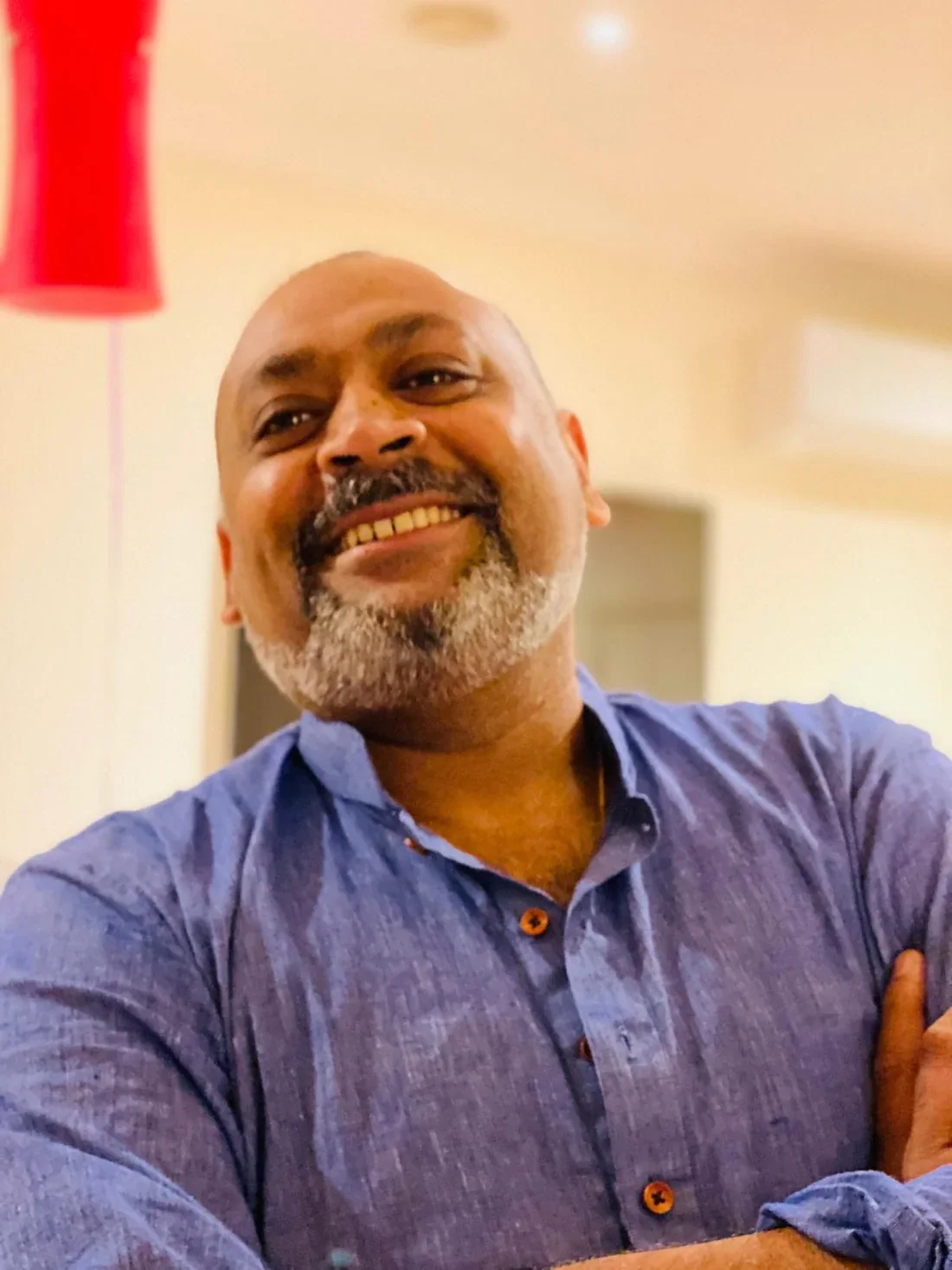
Author portrait
About me

Two cities. Two countries. A lifetime of memories.

I am a Malayali Christian who has spent almost equal halves of my life in two wonderful cities, in two very different countries. Born and brought up in Mumbai, where I spent my childhood, teenage years and early adulthood, I have called Melbourne home for over 25 years. I continue to spend time in both cities, each having shaped my personality, perspectives and understanding of the world in its own distinct way.

Although I have spent most of my professional life in business and technology, my interests extend well beyond them, particularly into cinema, literature, history and the wonderful complexities of human relationships.

I am neither a professional writer nor an activist. I simply enjoy a good story, an intelligent conversation and the occasional opportunity to look at something serious from a slightly ridiculous angle.

This website is a little home for the stories that emerge along the way.

A personal note

A little experiment, a great deal of affection.

This is my first attempt at a project of this nature, from writing the script to bringing it to life through narration, illustrations and video. Much of it involved experimentation, learning and, occasionally, getting things wrong, so please forgive any imperfections you may encounter along the way.

It is a humble first-time effort to present the story in the most entertaining, engaging and thought-provoking manner I could, put together with a great deal of affection for the country that inspired it.

Beyond all the jokes about religion, politics and avatars, this is essentially a story about what India means to each of us. I imagine that every person who calls themselves Indian has their own understanding of that relationship, shaped by the people they grew up with, the places they have lived, their experiences, memories and circumstances.

This happens to be my version of that story, told through the somewhat absurd workings of my imagination.

Somewhere out there, there are perhaps another billion and a half stories of what it means to be Indian, many of them still waiting to be told.
An invitation to collaborate

Where else could this stool go?

One of the most exciting aspects of this little experiment is the number of possibilities it opens up, almost all of which are beyond what I could accomplish on my own.

In another language

I would love to see the work translated into different Indian languages. While technology has made translation remarkably accessible, I believe it takes someone with a genuine mastery of a language and its cultural nuances to recreate the warmth, wit and subtleties of the original exchange.

On a stage, or in front of a camera

It doesn't necessarily require an elaborate stage, an expensive set or a large production. Two enthusiastic performers, a chair, a wooden stool and either an audience or a camera might be all it takes to make an hour pass rather pleasantly.

Through a human voice

Perhaps there are storytellers, orators or voice artists who might enjoy lending their voices to the characters, bringing their own skills and a distinctly human dimension to the performance.

On a printed page

Perhaps someone sees potential in publishing it as a chapbook, including it in an anthology exploring the idea of belonging, or presenting it in a format that hasn't even occurred to me.

I would be delighted to hear directly from anyone interested in exploring these possibilities collaboratively, finding new and engaging ways to bring the story to a wider audience while remaining faithful to its original spirit, humour and intent.

Get in touch to collaborate
From the writing desk / Forthcoming

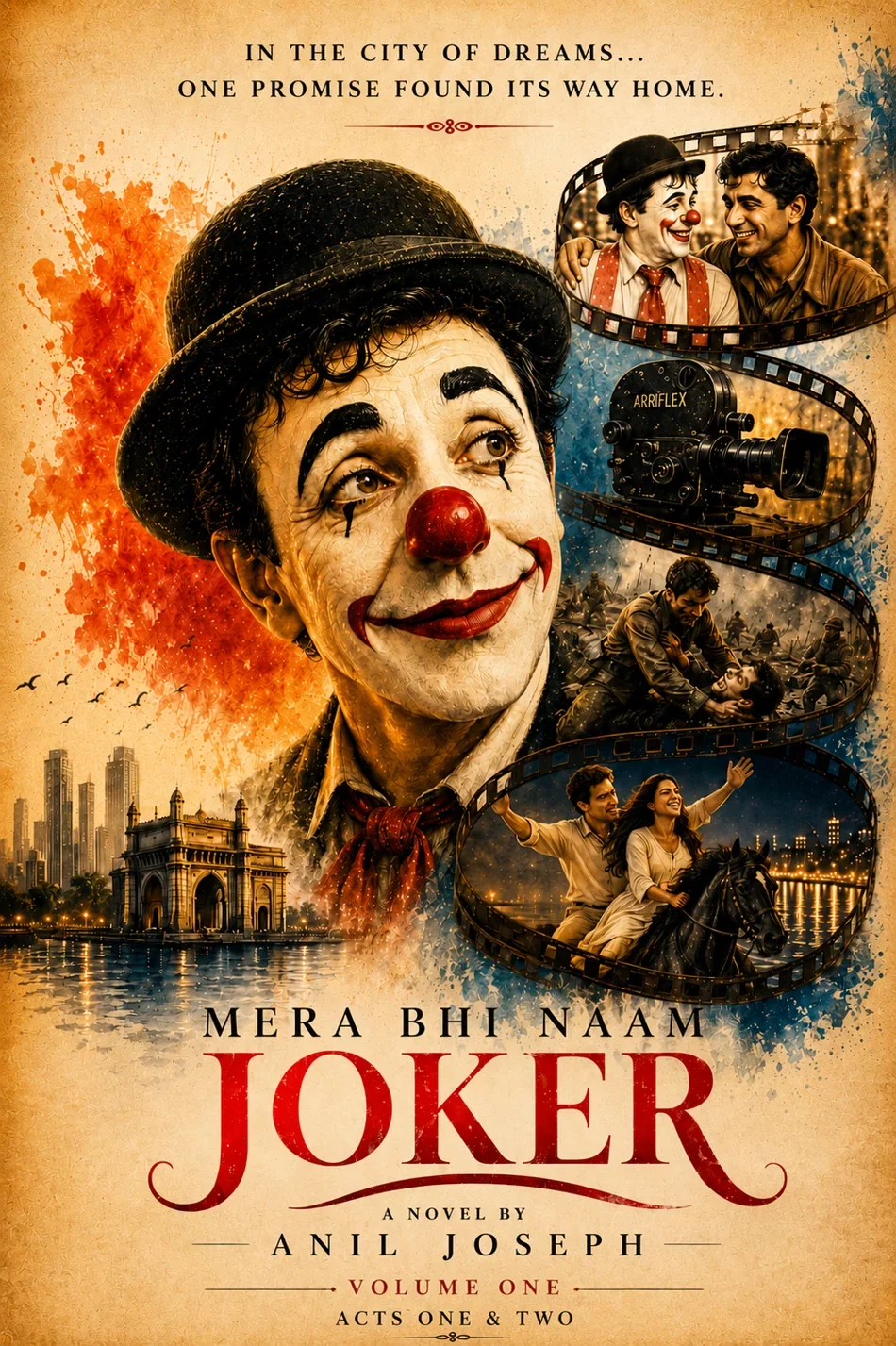
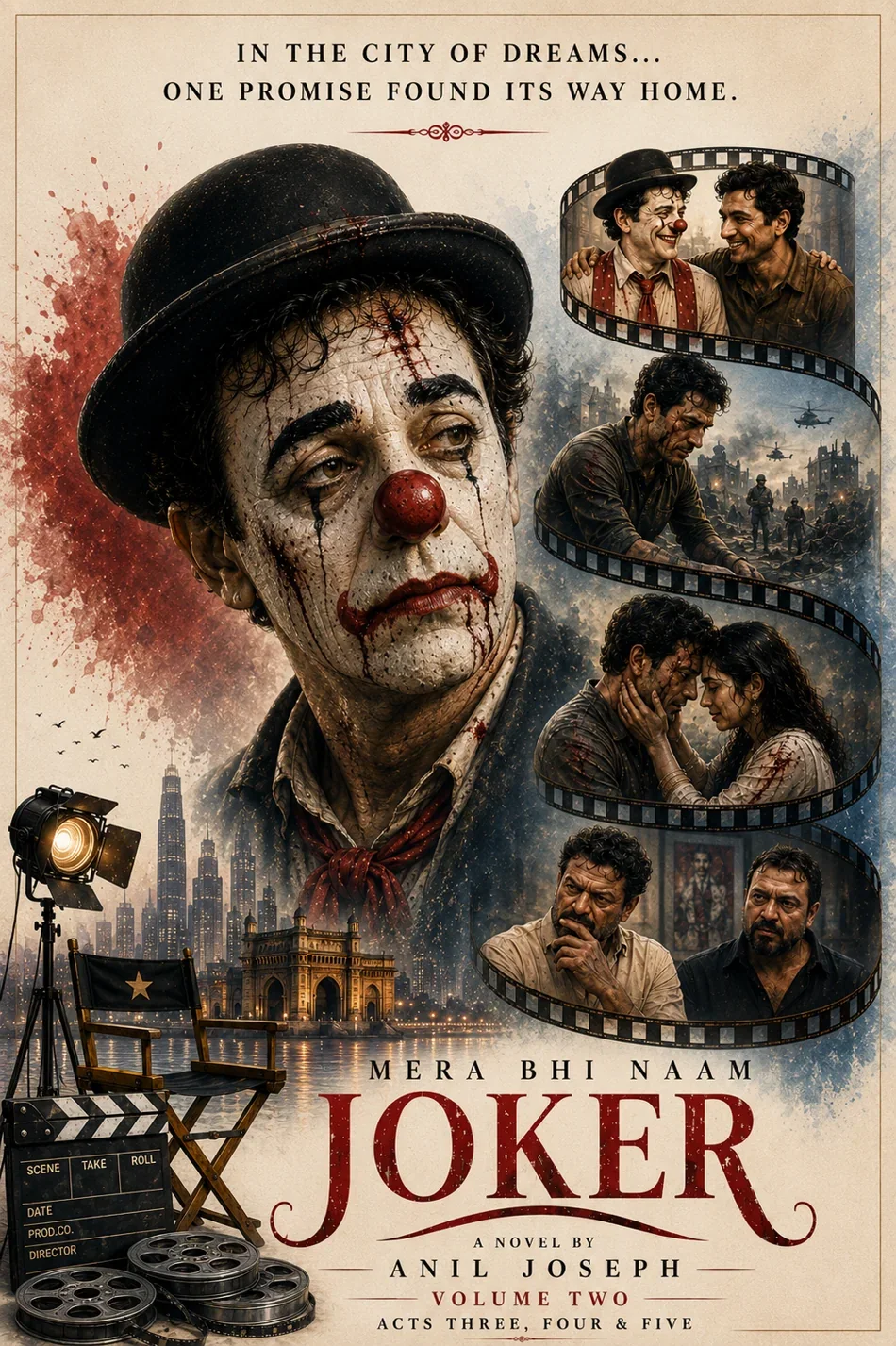
Mera Bhi Naam Joker

A camera. Two families. A journey across generations.

A friendship formed during Raj Kapoor’s time in the Soviet Union sets in motion the extraordinary journey of a film camera, a journey that spans continents, survives generations and eventually finds its way back to Mumbai.

Set against the rich worlds of Indian and Soviet cinema, Mera Bhi Naam Joker is a story of friendship, memory, love and the remarkable journeys that ordinary objects can take through extraordinary human lives.

A novel in two volumes · Forthcoming

Volume one coverVolume two cover
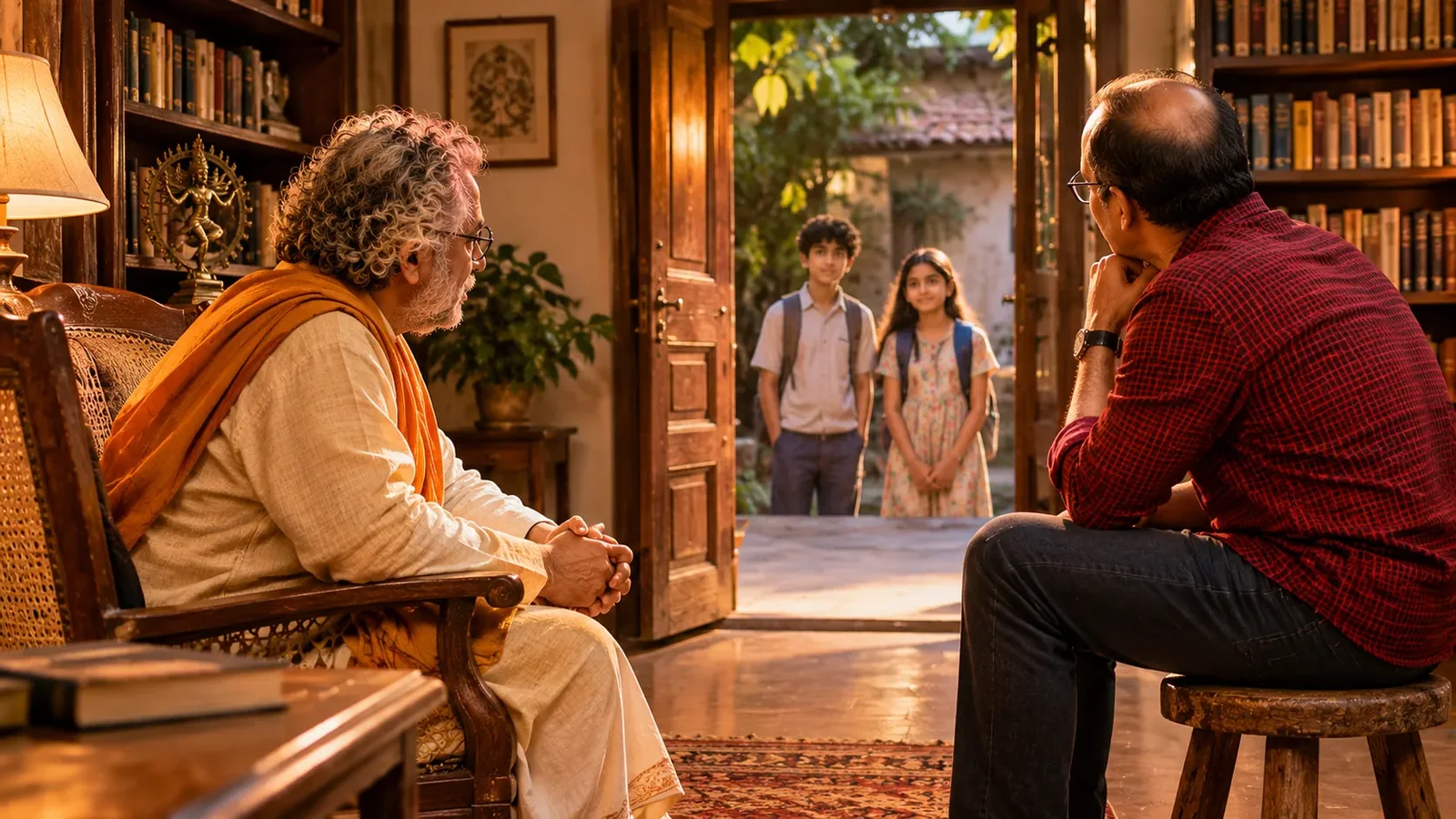
Two friends looking towards children at the open library door
Let's keep the conversation going

There is always room for another stool.

You don’t have to agree with everything in the play. In fact, a good conversation rarely begins with everybody agreeing.

If it made you laugh, made you uncomfortable, brought back a memory or left you with a question of your own, I would love to hear from you.

Whether you are a reader, a fellow storyteller or someone interested in exploring a creative collaboration, do get in touch.

Melbourne, Australia

Preview only. Message delivery will be enabled before launch.

COPYRIGHT & PERMISSIONS

Copyright and permissions

© 2026 Anil Joseph. All rights reserved.

May I Bring the Stool Inside? is an original literary and dramatic work authored by Anil Joseph.

The work is made freely available for personal reading, listening and viewing. Readers are welcome to share links to the official website and authorised publications.

Except as permitted by applicable copyright law, reproduction, redistribution, translation, adaptation, public performance, recording, republication or commercial use of the work requires the prior written permission of the author.

Enquiries regarding translations, performances, publishing rights and other creative collaborations are warmly welcomed.

All third-party material remains subject to the rights of its respective owners.

Contact the author